
Industrial & Commercial Reverse Osmosis Systems

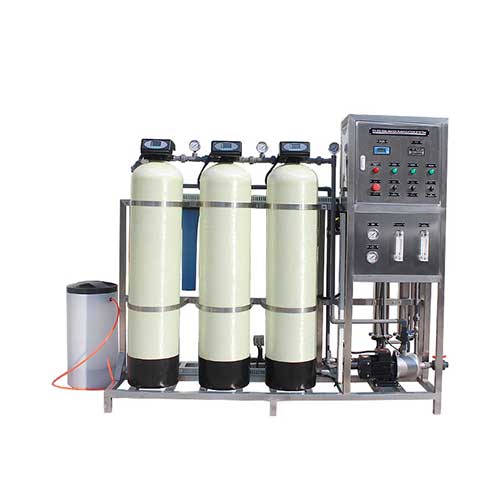

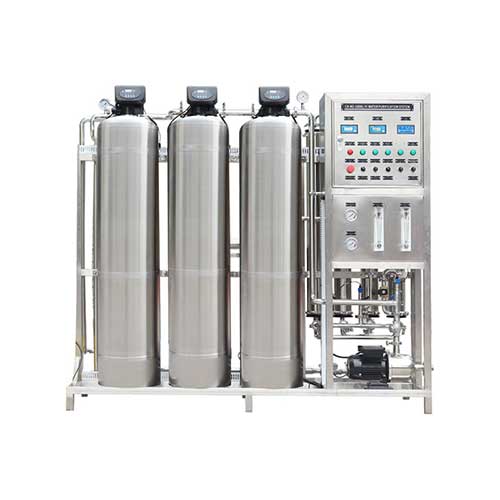
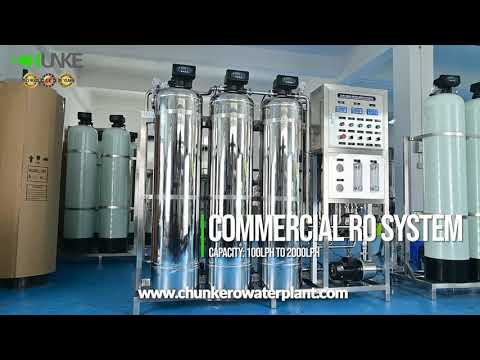


CHUNKE commercial reverse osmosis ro systems “CK-RO-100L to CK-RO-2000L series” are a compact and energy-efficient commercial RO unit . So we design ideally for tap, brackish and drinking water treatment applications. Hence our small commercial reverse osmosis equipment is capable of reaching incredibly high recovery rates.
As a china reverse osmosis system supplier, we offer a full line of pre-engineered and custom reverse osmosis systems for commercial use, ranging from 100 to 2000 liter per hour. In addition, these commercial RO systems produce high-quality water at a very low cost, all of which are engineered using the most advanced technology for accurate and customized solutions. Furthermore please watch our video for commercial reverse osmosis ro system.
What is the advantage of commercial reverse osmosis system?
Hence commercial ro system remove unwanted dissolved solids from your source of water (tab, brackish, borehole or well water) through the utilization of highly efficient reverse osmosis membranes. So Less wastewater, low energy consumption, high flow rates and contaminant rejection at competitive prices makes our commercial ro system the most valuable. As a result, CHUNKE small size commercial reverse osmosis water purification systems, along with our high level experience and new technology becomes very popular in water treatment industry.
- Compact and Stainless Steel Frame
- Membranes from most reputable brands for example DOW, Toray
- Long-lasting performance
- Quality control tests completed
- Minimal membrane fouling
- Ultimately Cost-effective
- Enhanced energy efficiency accordingly
- In adition, reduce of scaling deposits
- Moreover, Gain tasty water
What is the process of commercial ro system?
Compact commercial reverse osmosis purifiers purify water from water sources for example tap water, lakes, rivers, boreholes and wells. So commercial RO system utilizes a high pressure pump that pressurizes brackish or saline water against the surface of a semi-permeable membrane containing small pores. Meanwhile. water molecules are only permitted to flow through the small pores while blocking impurities for example salt, particles, minerals, and other organics from passing through. Hence, hhese small pores have a strong capability of rejecting bacteria and disease-causing pathogens. So, at the end of this process, you can get clean, purified water. However, dirty concentrated water with minerals, and other organics are sent into the brine stream then into a drain.
Commercial Reverse Osmosis System Flow Diagram:

What is the price or cost of commercial reverse osmosis system?
Hence, a commercial reverse osmosis machine cost is largely dependend on feed water quality and the required product water quality.
The following list details many of the common pre and post treatment components:
- Chemical and pH dosing for example SEKO
- Media filter for example sand, gravel.
- Carbon filter for instance activated carbon
- Water softener for example ion-exchange resin
- Antiscalant dosing
- Advanced controller
- Advanced instruments for example disk filter
- Iron removal filter for example greensand
- TDS, pH, Conductivity monitoring
- Stainless Steel Skid or frame
- Blending systems
- Three phase electrical system and accessories
- PLC components accordingl
More About Commercial Reverse Osmosis RO System
Commercial enterprises across various industries rely on high-quality water for their daily operations. In this regard, Commercial Reverse Osmosis (RO) systems have emerged as a leading technology for water purification and treatment. By employing the principles of reverse osmosis, these systems deliver exceptional water quality, while also offering efficiency benefits. This essay explores the significance of commercial RO systems, their working principles, key advantages, and considerations for successful implementation.
Understanding Commercial Reverse Osmosis Systems
Commercial RO systems are designed to cater to the specific needs of businesses and industries that require large volumes of purified water. These systems employ the process of reverse osmosis, wherein a semi-permeable membrane selectively removes impurities and contaminants from the water. The RO membrane allows water molecules to pass through while blocking dissolved solids, bacteria, and other unwanted substances, resulting in purified water.
Working Principles of Commercial RO Systems
Commercial RO systems consist of various components that work together to ensure efficient water treatment. The process begins with pre-treatment, which involves the removal of larger particles, sediments, and organic matter through processes such as sediment filtration, activated carbon filtration, and sometimes, water softening.
Following pre-treatment, the pressurization stage occurs. The pre-treated water is pumped into the RO membrane under high pressure, causing water molecules to permeate through the membrane while leaving behind concentrated impurities and contaminants. The purified water, known as permeate, is collected and stored for use, while the concentrated wastewater, referred to as brine or reject water, is discharged.
Benefits of Commercial Reverse Osmosis Systems
Superior Water Quality: Commercial RO systems offer exceptional water purification capabilities, effectively removing impurities, dissolved solids, heavy metals, and contaminants. The result is high-quality water that meets or exceeds regulatory standards, ensuring the safety and quality of products and processes.
Enhanced Efficiency: These systems optimize water usage by recovering a significant portion of the feedwater as purified permeate. Commercial RO systems typically exhibit water recovery rates ranging from 50% to 80%, minimizing water wastage and reducing the strain on water resources.
Cost Savings: Implementing a commercial RO system can lead to long-term cost savings. By producing purified water on-site, businesses can eliminate the need to purchase and transport large quantities of water. Additionally, the removal of contaminants helps prevent scaling and corrosion issues, reducing maintenance and equipment replacement costs.
Environmental Sustainability: Commercial RO systems contribute to environmental sustainability by conserving water resources and reducing reliance on external water supplies. By implementing RO technology, businesses can align with sustainable practices, reduce their environmental footprint, and enhance their corporate reputation.
Considerations for Successful Implementation
To ensure successful implementation and maximize the benefits of commercial RO systems, the following considerations should be taken into account:
System Design and Capacity: Engaging with experienced professionals or reputable manufacturers is crucial for designing a system that meets the specific water purification needs of the business. Factors such as water demand, feedwater quality, and desired water quality must be carefully evaluated to determine the appropriate system capacity and configuration.
Pretreatment and Maintenance: Adequate pretreatment measures, such as prefiltration, pH adjustment, and chemical dosing, are vital for protecting the RO membrane from fouling and scaling. Regular maintenance, including membrane cleaning and replacement, should be performed to ensure optimal system performance and longevity.
Monitoring and Control: Continuous monitoring of system parameters, such as pressure, flow rates, and water quality, is essential for detecting any deviations or issues promptly. Implementing automated monitoring and control systems can help maintain system efficiency and facilitate timely corrective actions.
Compliance and Regulations: It is important to ensure that the commercial RO system complies with relevant industry regulations and standards. Adhering to regulatory requirements and obtaining necessary permits and certifications can help avoid legal complications and demonstrate a commitment to water quality and safety.
To get more information and some of our project cases about Commercial Reverse Osmosis RO Systems, please feel free contact with us:
Reverse Osmosis System Manufacturer for Industrial & Commercial Projects
Chunke designs and manufactures every reverse osmosis system in-house in Guangzhou, China, from compact commercial RO systems of 100 LPH to large industrial reverse osmosis plants of 1000 m³/h. Each RO system is engineered from your raw water analysis, so the pretreatment, membrane array and post-treatment match your feed water and the product water quality your process needs. As a result, project owners, EPC contractors and factories get one supplier for the complete RO water treatment plant, not just a membrane skid.
If you want to see how the stages connect, our reverse osmosis plant diagram explains each step from feed pump to product tank.
Industrial RO System Specifications
| Capacity range | 100 LPH – 1000 m³/h (single or multiple trains) |
|---|---|
| System types | Skid-mounted, containerized RO plant, single-pass and double-pass RO |
| Feed water | Tap, well, river, surface and brackish water (for seawater, see our seawater RO plant range) |
| Pretreatment | Multimedia filter, activated carbon, softener, cartridge filter, antiscalant dosing, optional UF filtration |
| Post-treatment | EDI, mixed bed, UV sterilization, remineralization / pH adjustment |
| Instrumentation & control | PLC control, conductivity, pressure and flow monitoring, pH & ORP controller with sensor, feed/permeate blending |
| Power supply | 380–415V / 3-phase / 50 or 60 Hz (other voltages on request), solar-powered option |
| Options | UF, EDI, mixed bed, containerized, solar, remote monitoring, UV systems, pH & ORP control, feed/permeate blending |
Final design, recovery rate and membrane array depend on your water analysis and required product water quality.
Reverse Osmosis System Applications
Drinking Water, Food & Beverage
Our RO systems produce safe drinking water for communities, hotels and factories, as well as process water for food and beverage plants, beverage production and bottled water lines, and ice manufacturing. Moreover, feed/permeate blending and remineralization let you set the taste and mineral content you need.
Power Plants & Boiler Feed Water
For power plants, boiler feed water and cooling towers, RO removes most dissolved salts before the boiler, which reduces scaling and blowdown. In addition, an RO + EDI or RO + mixed bed line delivers high-purity make-up water, and RO also works as ion exchange pre-treatment to cut regeneration chemical use.
Electronics, Pharmaceutical & Laboratory
Electronics manufacturing, pharmaceutical production and laboratory water purification systems need consistent, low-conductivity water. Therefore, we combine double-pass RO with EDI or mixed bed polishing, UV and continuous conductivity monitoring.
Metal Finishing, Plating & Chemical Blending
Plating operations, metal finishing and chemical blending rely on clean rinse water to avoid spots and contamination. Likewise, our systems supply rinse water and spot-free product rinse water for finishing lines.
Mining Industry
Mining sites often treat difficult well or brackish water far from infrastructure. For these projects, a containerized reverse osmosis system with remote monitoring and an optional solar supply is the practical choice.
Popular RO Plant Capacities
Many buyers start from a standard size, for example a 1000 LPH RO plant, a 5000 LPH RO plant, a 10000 LPH commercial RO plant or a 20000 LPH RO water treatment plant. For higher flows, see our large-scale reverse osmosis systems.
Reverse Osmosis System FAQ
What is an industrial reverse osmosis system?
An industrial reverse osmosis system uses high-pressure pumps to push water through semi-permeable RO membranes, which remove most dissolved salts, bacteria and organics. A complete system includes pretreatment, the RO membrane skid, post-treatment, controls and cleaning (CIP) equipment.
What capacities do your RO systems cover?
Chunke builds RO systems from 100 LPH for commercial use up to 1000 m³/h for industrial and municipal projects. Larger flows are split into multiple trains for redundancy and easier maintenance.
What information do you need to quote an RO system?
Please send your raw water analysis (TDS, hardness, iron, silica, SDI or turbidity), the required product water flow and quality, the application, your power supply and the site location. With this, our engineers size the pretreatment, membranes and post-treatment for your project.
When do I need EDI or a mixed bed after RO?
RO alone is enough for drinking water, beverage and most rinse water. However, boiler feed water, electronics, pharmaceutical and laboratory applications usually need RO followed by EDI or a mixed bed to reach high-purity water.
Can the RO system be containerized or solar powered?
Yes. We supply RO systems pre-installed in 20ft or 40ft containers for fast installation, and we offer solar-powered and remote-monitoring options for sites with weak grid power or no operators on site.
How much does an industrial reverse osmosis system cost?
The price depends mainly on capacity, feed water quality, the pretreatment and post-treatment required, and material choices. Therefore, the most accurate way to get a price is to send us your water analysis and required capacity for a project-specific quotation.
Request a Quotation for Your RO System
Tell us your capacity, water source and application, and our engineering team will propose the right reverse osmosis system for your project. Simply fill in the enquiry form on this page, and our team will contact you.